UPDATED NEWS
Get You Updated on Playground Equipment News.
Get You Updated on Playground Equipment News.






Date: 2026-01-30 15:15:06 Click: 802







When selecting non-powered children's play areas (which rely on external power sources like electricity and emphasize natural play and physical activity), the core considerations are safety, fun, inspiration, and age-appropriateness. The most suitable spaces typically possess one or more of the following characteristics:
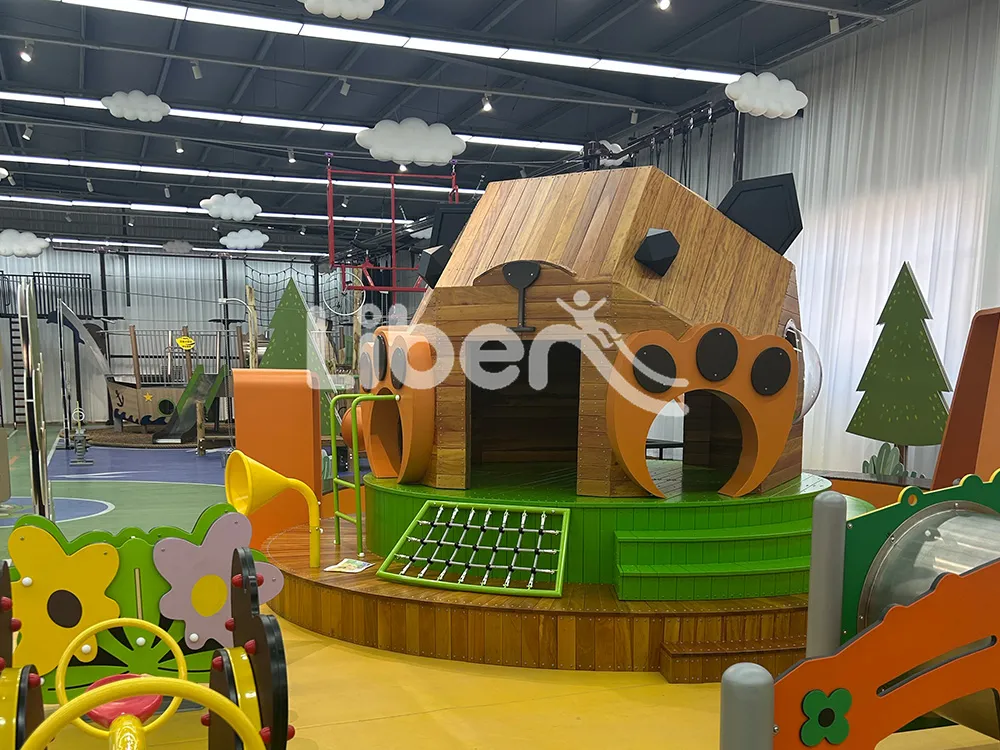
Amid the wave of building child-friendly cities, non-powered children's play areas have become an important indicator of urban quality. As a professional manufacturer of non-powered play equipment, Liben Group, drawing on years of project experience, has summarized four ideal location scenarios, each requiring a unique design logic and product mix.
Public Parks and Green Spaces are natural playgrounds for children. Liben Group recommends selecting sunny lawn areas with ≥6 hours of daily sunlight for installing combination slides, themed slides, and swing sets. For example, Quzhou City mandates that parks over 5 hectares must include ≥2000 m² of all-ages children's facilities, with half the area for children under 6 located outside building shadow lines. In a Shanghai park project, we designed an "Insect Hotel" themed play area, integrating climbing structures with ecological observation devices, allowing children to explore nature while climbing. This design meets environmental requirements while serving educational purposes.
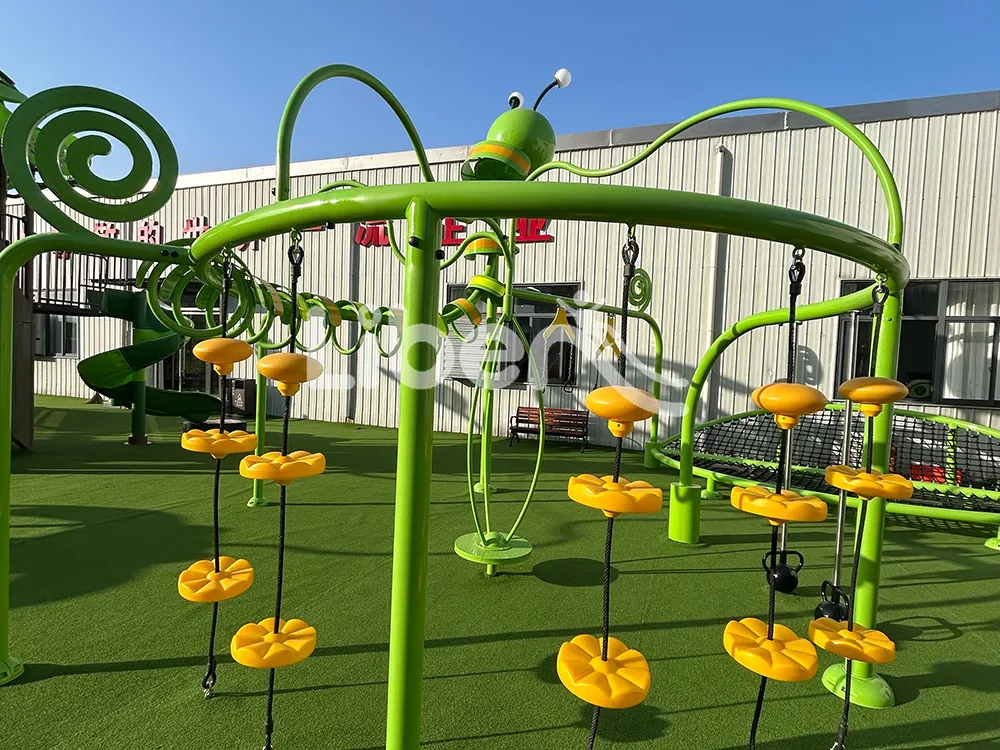
Residential Areas are high-frequency usage scenarios, requiring the creation of a "growth zone at the doorstep." Liben Group adopts an age-segmented zoning strategy: areas for ages 0-3 near entrances (20-25% of space) with low-profile themed slides and rockers; challenge zones for ages 7-12 (20-30% of space) in peripheral areas with advanced climbing nets and balance beams. In a Guangzhou community renovation, we transformed a 15 m² corner into a toddler zone using a "facilities against walls, central open space" layout, accommodating 8 children simultaneously. Areas adjacent to residences require ≥10-meter green buffers using non-thorny shrubs like holly to reduce noise and ensure community harmony.
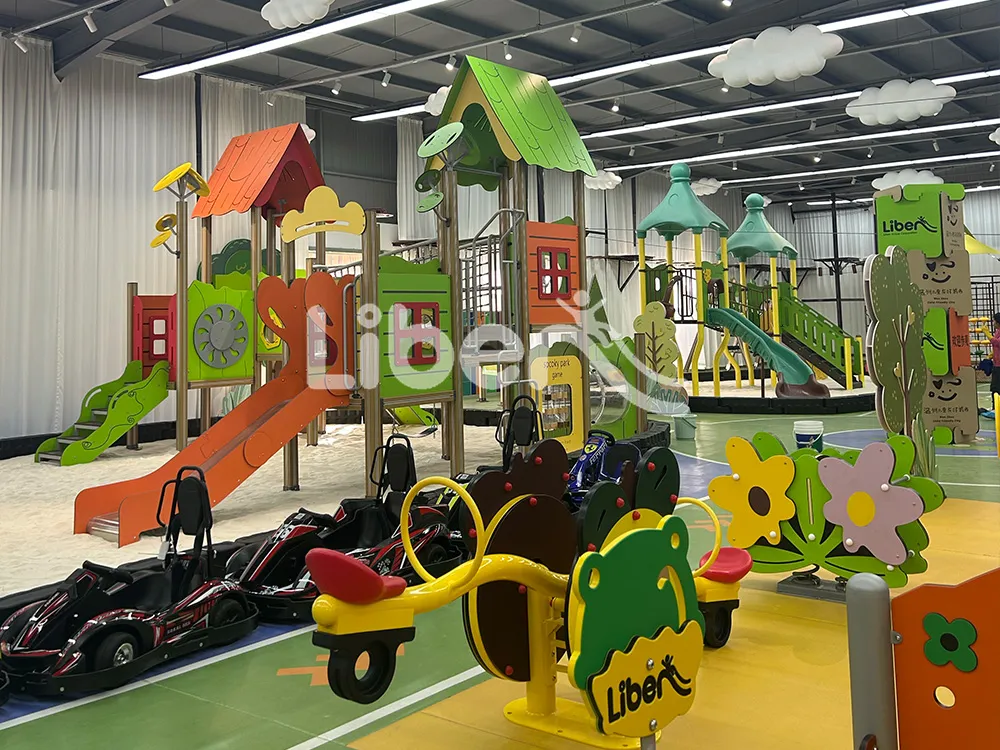
Shopping Centers are emerging as new social spaces for families. Liben Group innovates with products adaptable to various commercial settings: large combination slides and swing clusters for rooftop lawns (e.g., a 20,000 m² free non-powered playground in a Shanghai mall); AR interactive slides for atriums enhancing engagement through mixed reality; retractable sand/water tables for outdoor plazas. A Guangzhou mall placed the play area beside family restaurants with sightline-integrated designs, allowing supervision during meals while boosting commercial efficiency.
Schools and Kindergartens require combined "education movement" designs. Our "Science Movement" space for a Jinhua primary school features upper-level electromagnetic induction generators above climbing/ sliding structures, enabling scientific exploration through physical activity. Stairwell gaps can host "stair jumping zones," playground edges accommodate movable balance beams, and unused rooftops transform into "sky farm" play areas, maximizing fragmented space utilization.
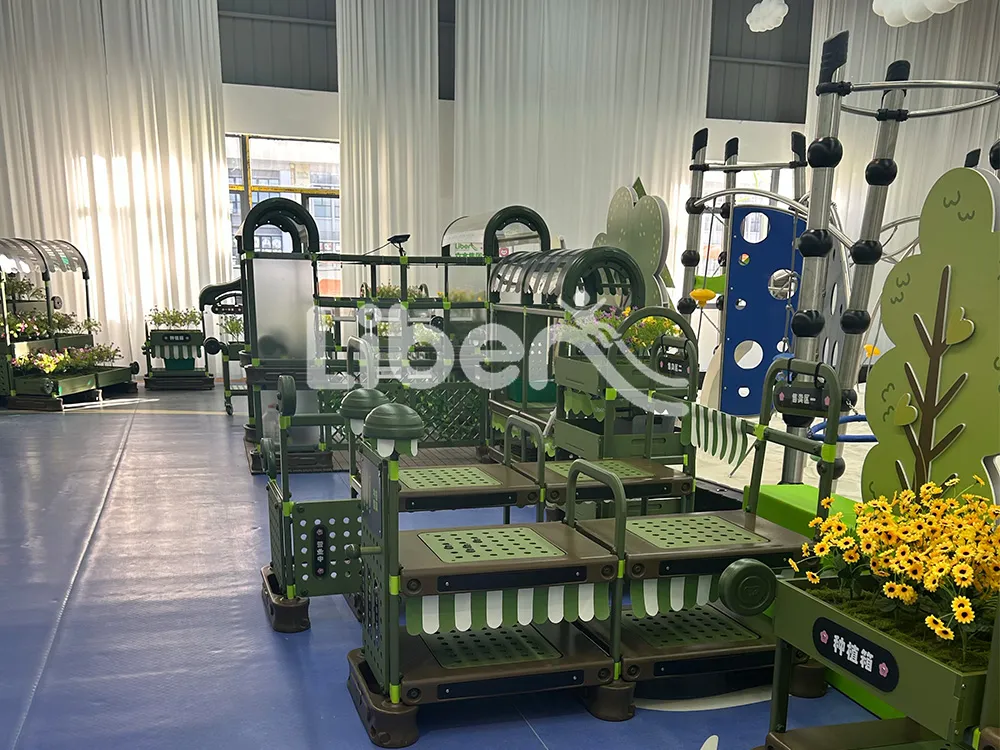
Liben Group believes ideal non-powered play areas should act as "growth catalysts." Through modular expandable designs (e.g., climb nets with adjustable difficulty nodes), we extend equipment lifespans from 5 to 10 years. As the "15-Minute Living Circle" concept gains traction, we remain committed to enhancing child-friendly cities through safe/eco-friendly products, age-specific zoning, and thematic environments - ensuring every child enjoys safe, engaging play spaces within their neighborhood, truly realizing the vision of child-friendly urbanism.